Horia Bernea
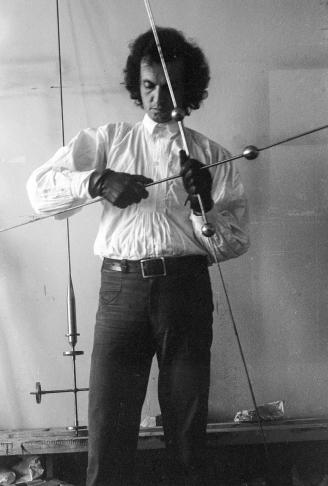
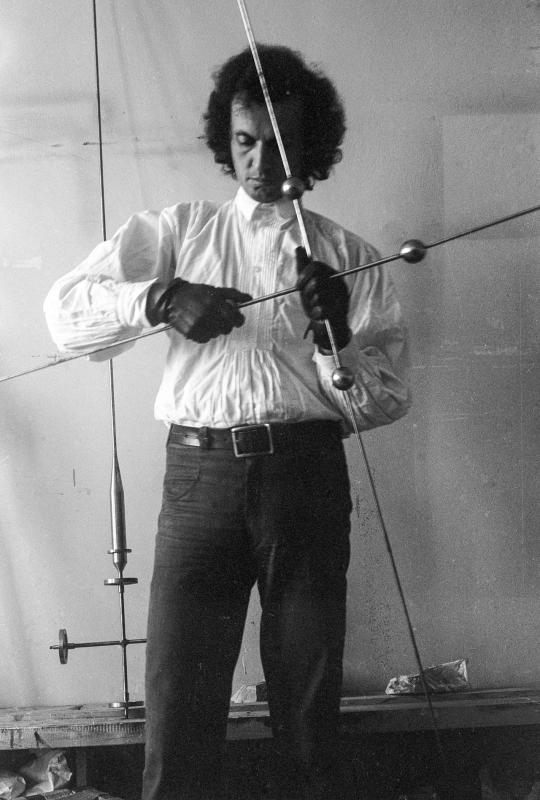
As one who emerged in the Romanian art scene during the 1960s, Horia Bernea responded to a widespread crisis of representation by shifting from descriptive painting to painting’s conceptual and existential foundations. His works often revolve around recurring motifs such as hills, gardens, crosses, columns, banners (“prapori”), churches, and rural landscapes. These subjects function not merely as objects of observation but as vehicles for meditation. For Bernea, painting became a means of investigating the relationship between material presence and spiritual meaning. A defining characteristic of
Bernea’s art is its emphasis on materiality. Thick layers of pigment, visible brushwork, and textured surfaces assert the physical reality of the painted object while simultaneously directing the viewer toward intangible and transcendent concerns. This tension between matter and spirit distinguishes his practice both from socialist-realist conventions and from purely formalist abstraction. The artist’s intellectual development was influenced by Romanian Orthodox culture and by the ethnographic interests he inherited from his father, the sociologist and ethnographer Ernest Bernea. These influences encouraged a vision of culture rooted in collective memory and the symbolic and ritual structures of rural life. Bernea’s paintings frequently evoke archetypal spaces rather than specific locations, transforming the Romanian landscape into a broader reflection on identity and spiritual belonging. His oeuvre thus needs to be understood not just through his paintings but also through his broader cultural vision. Bernea created a body of work that transcends regional boundaries and continues to contribute to contemporary debates concerning identity and the role of art. In doing so, this oeuvre oscillates between a revitalization of Romanian rural culture and an Orthodox visuality embedded in a modernist framework. W.S.
more